
Independent roof inspections and post-removal sign-off across the North East
Spray foam on the underside of a roof can trap moisture, hide the condition of the timbers and stop a sale or remortgage in its tracks. Whether the foam is still there or has already been taken out, lenders and buyers want independent evidence. We provide it — carried out by a chartered surveyor who has nothing to sell you but the inspection.


RICS-Regulated Firm • MRICS Chartered Surveyor • MCABE Chartered Building Engineer • MRPSA • Professional Indemnity Insured
An estimated 250,000 UK homes have spray foam on the underside of the roof, much of it sold on the doorstep or under past energy schemes. When the Property Care Association and the HomeOwners Alliance reported on more than 500 inspections in May 2025, they found defects in 35% of them.
A roof is meant to let moisture escape. Foam sprayed onto tiles, slates or bitumen felt can trap it against the outer face of the rafters and battens, where decay can start unseen.
Once the rafters, battens and underlay are covered, nobody — surveyor, valuer or buyer — can see their condition. That uncertainty is the reason many lenders ask for more evidence.
Many lenders will still lend, but only with the right evidence. Equity-release and later-life lenders have been the strictest, and government guidance warns that removing the foam does not guarantee a lender will accept the property.
Research carried out by HSE for the Building Safety Regulator (March 2024) modelled spray foam in timber pitched roofs in a milder London climate and a harsher Newcastle climate. The risk depended mainly on what the foam was sprayed onto — and was generally higher in the Newcastle climate.
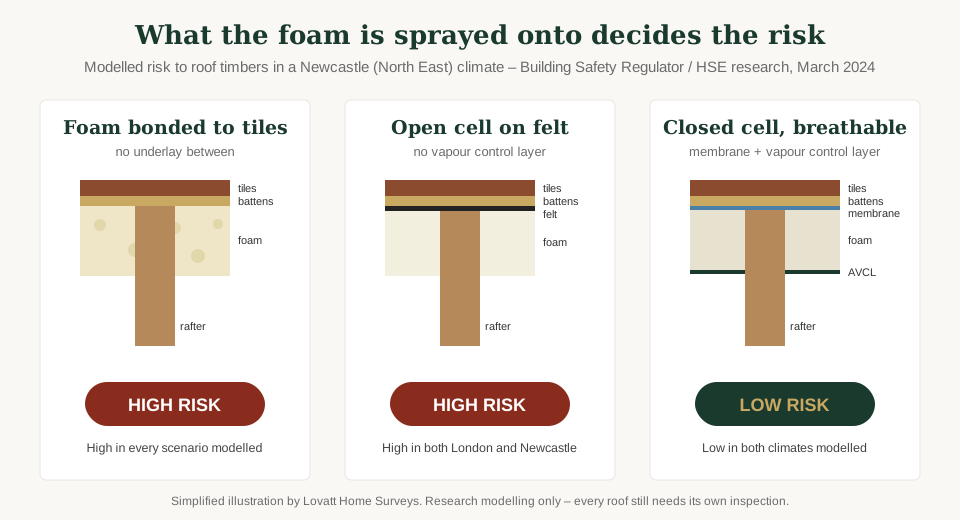
| Roof build-up | London climate | Newcastle climate |
|---|---|---|
| Foam directly on slates or tiles (any foam, with or without a vapour control layer) | High | High |
| Open cell on felt, no vapour control layer | High | High |
| Open cell on felt, with vapour control layer | Low | Medium |
| Closed cell on felt, no vapour control layer | Low | High |
| Closed cell on felt, with vapour control layer | Low | Low |
| Open cell on a breathable membrane | Low | Medium |
| Closed cell on a breathable membrane, no vapour control layer | Low | Medium |
| Closed cell on a breathable membrane, with vapour control layer | Low | Low |
| Open cell installed to BS 5250:2021 (vapour control layer and ventilated gap) | Low | |
The research is theoretical modelling of a limited set of roofs, and the regulator has said it is not a guide to surveying existing roofs. It is why we never assume what the foam is bonded to — we establish it on site.
There is no single spray foam “certificate”. What lenders, buyers and conveyancers rely on is evidence assessed against the documents below.
| Document | Who it’s from | What it does |
|---|---|---|
| Sprayed Foam Insulation Inspection Protocol (March 2023) | Property Care Association (PCA) and Residential Property Surveyors Association (RPSA) | The framework for inspecting foam in pitched roofs, and the document lenders refer to most. Five stages: observations, knowledge, assumptions, evidence, then a reasoned conclusion. |
| Spray foam insulation: remediation, removal and lending (22 October 2026) | Department for Energy Security & Net Zero (GOV.UK) | Tells owners to take advice from a specialist surveyor before removal, points to the PCA/RPSA protocol, and lists lenders open to lending on homes with spray foam subject to their own requirements. |
| Joint spray foam customer guidance | PCA, Insulation Manufacturers Association, RPSA, RPC Legal and Andy Wilson Financial Services | How to choose an assessor — including checking they belong to an appropriate body such as the PCA, RPSA, RICS or CABE, hold PI insurance and are free of any commercial interest in removal. |
| Moisture risk of spray foam applied to timber sloped roofs (March 2024) | Building Safety Regulator / HSE | The modelling above: which build-ups are high, medium or low risk in London and Newcastle climates. |
| BS 5250:2021 – management of moisture in buildings | British Standards Institution | The code of practice for controlling condensation; open-cell foam with a vapour control layer and ventilated gap to BS 5250 was low risk in the modelling. |
| Spray foam insulation consumer guide | RICS | Treats foam as a serious modification, recommends advice independent of the installer, and notes a valuer may ask for a specialist report. |
| Product certificate & handover pack | BBA or Kiwa (product); the installer | The paperwork that should come with any installation: pre-installation roof evaluation, condensation risk assessment, product certificate, installer details and guarantee. |
| Building Regulations Part L & Part C (Approved Documents) | MHCLG | Re-roofing or re-insulating after removal can bring the work under the Regulations — thermal upgrade under Part L, condensation control under Part C. A replacement roof normally needs a building notice. |
| RICS Home Survey Standard | RICS | Governs our Level 1, 2 and 3 survey reports, where spray foam is identified, described and flagged. |
The joint customer guidance — named in the government’s own spray foam guidance — tells homeowners to check their assessor belongs to an appropriate body such as the PCA, RPSA, RICS or CABE, holds professional indemnity insurance, and is free of any commercial interest in removal. Dave is a member of three of those four bodies, and Lovatt Home Surveys neither installs nor removes spray foam.
Dave Lovatt BSc (Hons) MRICS MCIOB MCABE C.Build E MIConstM MISSE MQSI FACQP MRPSA — twenty years in building pathology, defects and remediation across the North East’s housing stock.
The evidence a lender or buyer wants depends on where you are. Lender criteria vary and change, so always check with your broker or lender too.
| Your situation | What’s usually needed | Why |
|---|---|---|
| Buying a home with spray foam in the roof | An independent inspection report under the PCA/RPSA protocol before you exchange, plus the installer’s handover pack if it exists | Many lenders ask for it, and it tells you whether the foam can stay, needs work or needs to come out — before you’re committed |
| Selling or remortgaging with foam in place | A protocol report and the installation paperwork (roof evaluation, condensation risk assessment, BBA/Kiwa certificate, guarantee) | Your buyer’s lender, or your own, will want evidence the foam isn’t putting the roof at risk |
| Thinking about removal | An independent assessment first — only remove the foam if it recommends removal — then a written method statement from the contractor | Removal can damage tiles, battens and underlay, and removal alone does not guarantee lending |
| The foam has already been removed | A completion pack and an independent post-removal inspection with timber moisture readings | There is no national removal certificate or register. Evidence, checked independently, is what counts |
| Re-roofed or re-insulated after removal | Building control completion certificate, plus invoices and guarantees for the roof work | Re-roofing and re-insulation can be notifiable building work under Parts L and C |
| Equity release or later-life lending | Check the lender’s criteria early — some have required full removal, residue cleared, a roof report and repairs | These lenders have historically been the strictest, though some specialist products have appeared |
Spray foam is a problem to manage properly, not a reason to panic — and certainly not a reason to sign up with the first cold caller.
The same disciplined approach whether the foam is still in place or has just been taken out.
You send the address and whatever paperwork exists — installation handover pack, removal invoice, method statement, photos. We tell you what’s missing before we visit.
Inside the roof: foam type, what it’s bonded to (never assumed), coverage at gables, party walls, valleys, ridge and eaves, gaps and cracks, cables and pipes, ventilation, ceiling-level insulation and any vapour control layer, with timber moisture readings wherever timber is exposed. Outside: the roof covering, ridge, valleys, flashings and chimneys, inspected by drone.
The protocol allows three outcomes: risk not significantly increased; risk increased, with measures to reduce it; or insufficient information, with the further investigation needed. You get a clear, written conclusion — not a sales pitch for removal.
If removal is the right answer, we can set out what a proper removal must achieve and review the contractor’s method statement. We are not the remover and take no commission from one.
Once the foam is off — and before anything is re-boarded or re-insulated — we inspect for residue, decay, staining and moisture, check underlay, battens and fixings, ventilation, insulation and services, and photograph the eaves.
An independent report your lender, buyer and conveyancer can rely on, with photographs and moisture readings, cross-referenced to the completion pack. Where repairs are needed, a chartered QS cost estimate is available.
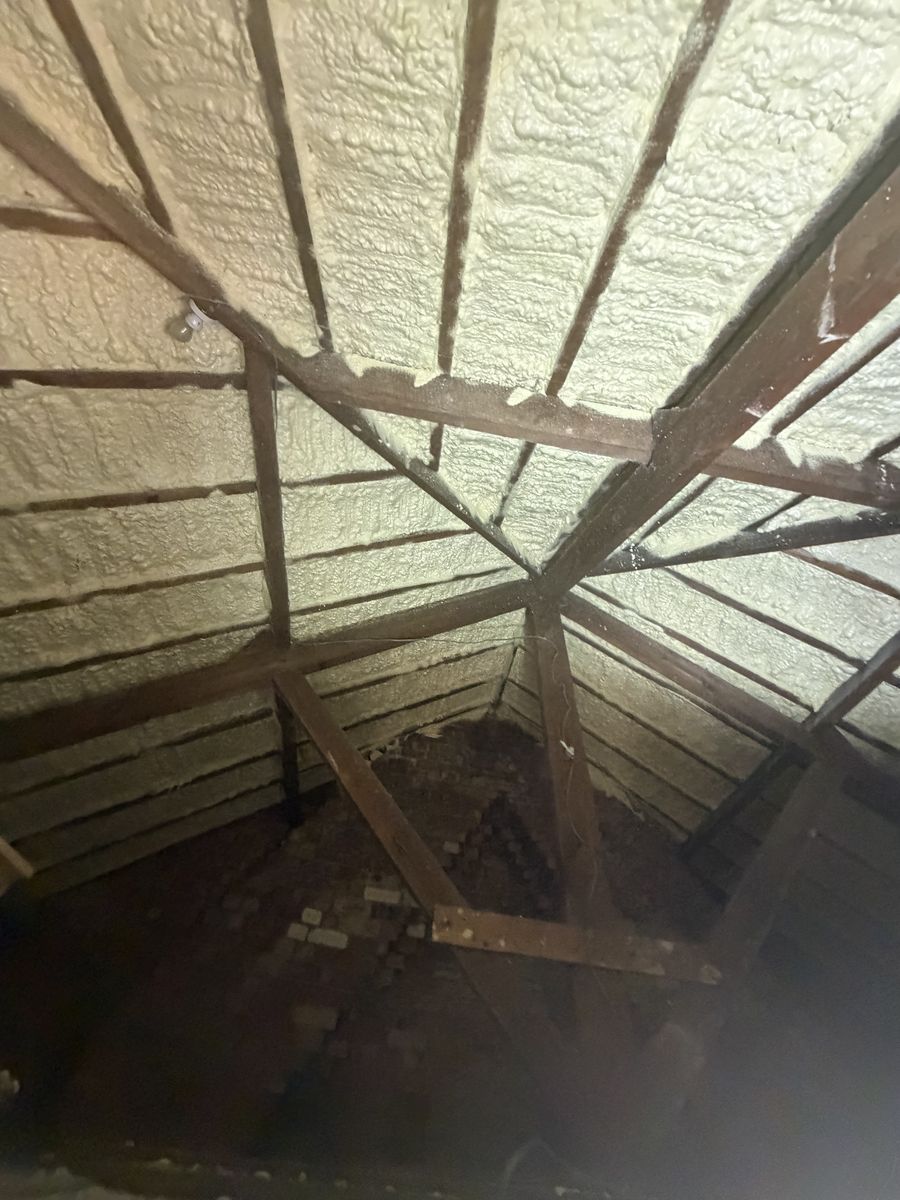
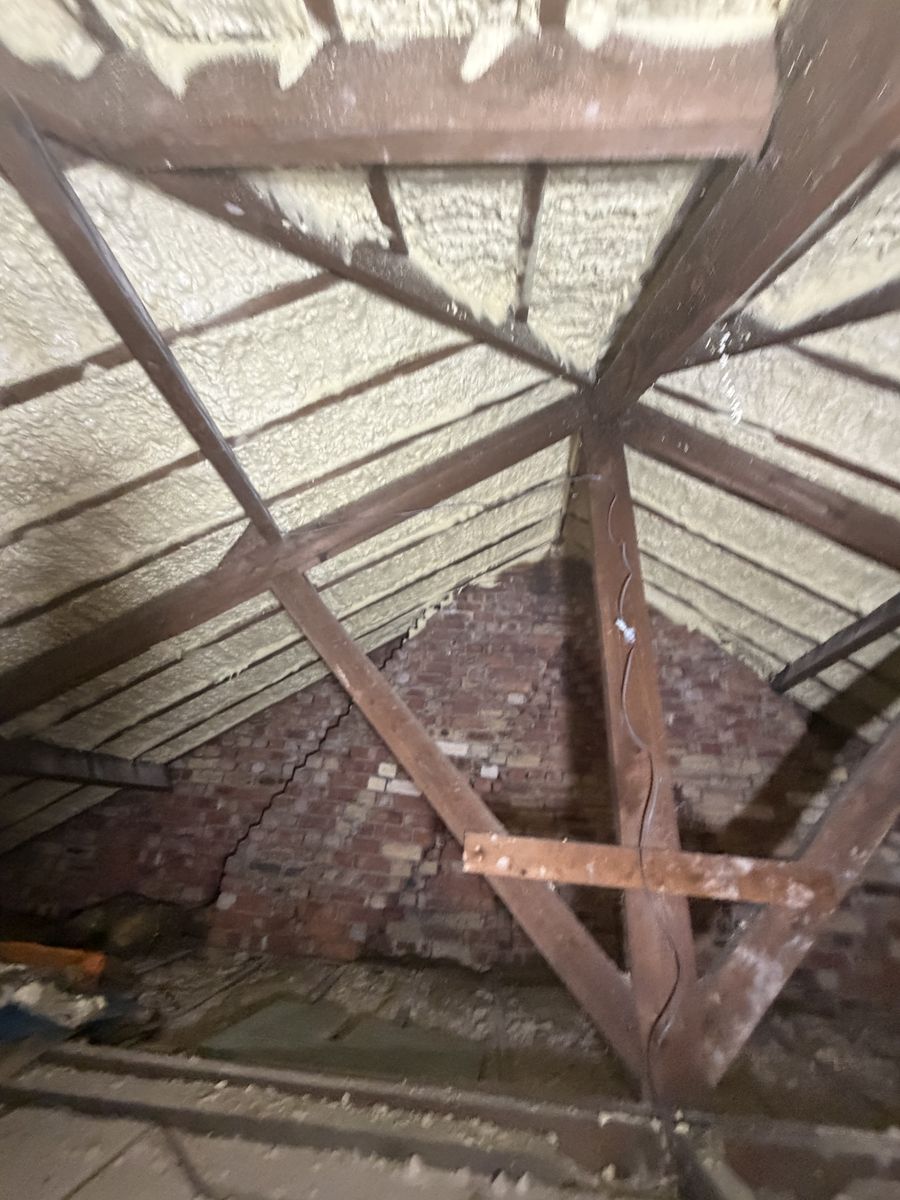
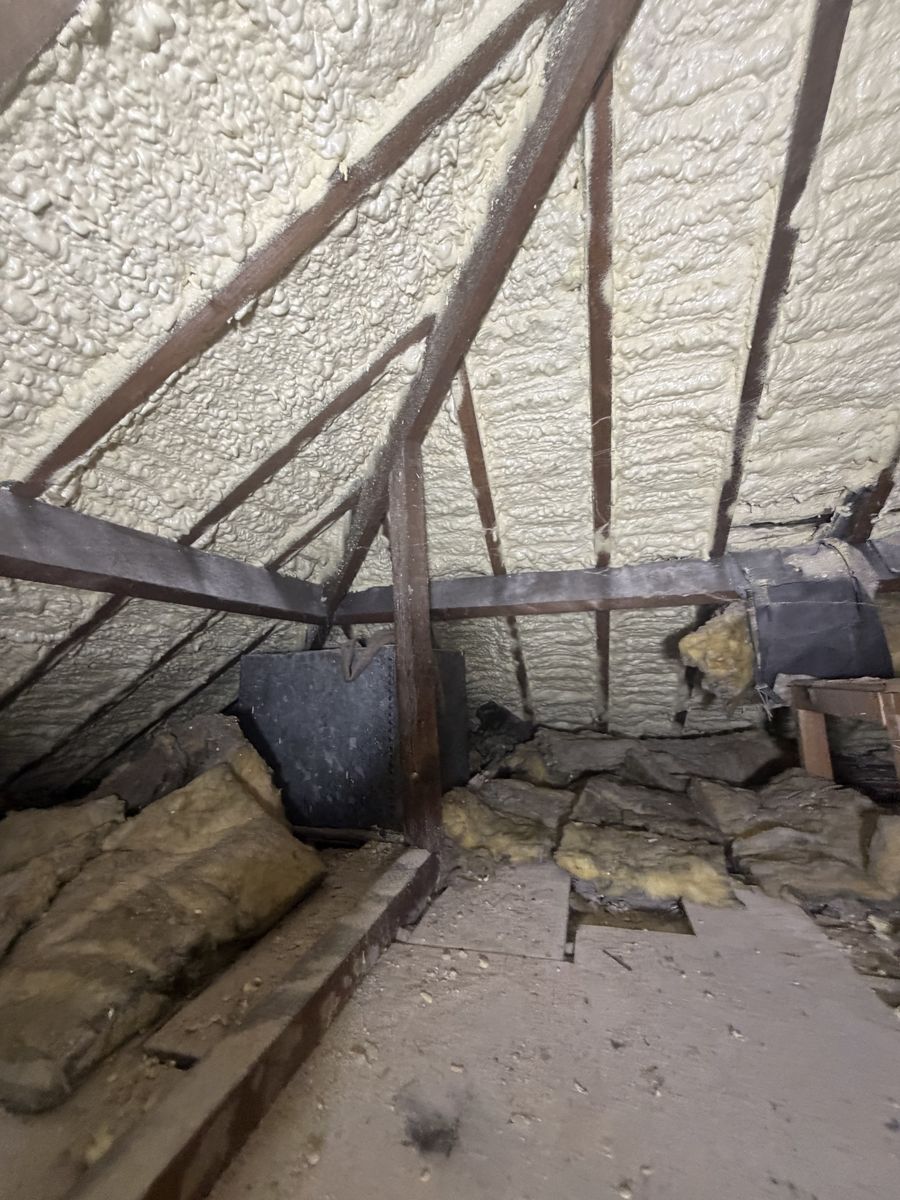
These photographs are from a recent North East survey where the vendor had paid for the foam to be taken out a few months earlier. The bulk had gone — but the job was not finished, and no paperwork had been left.
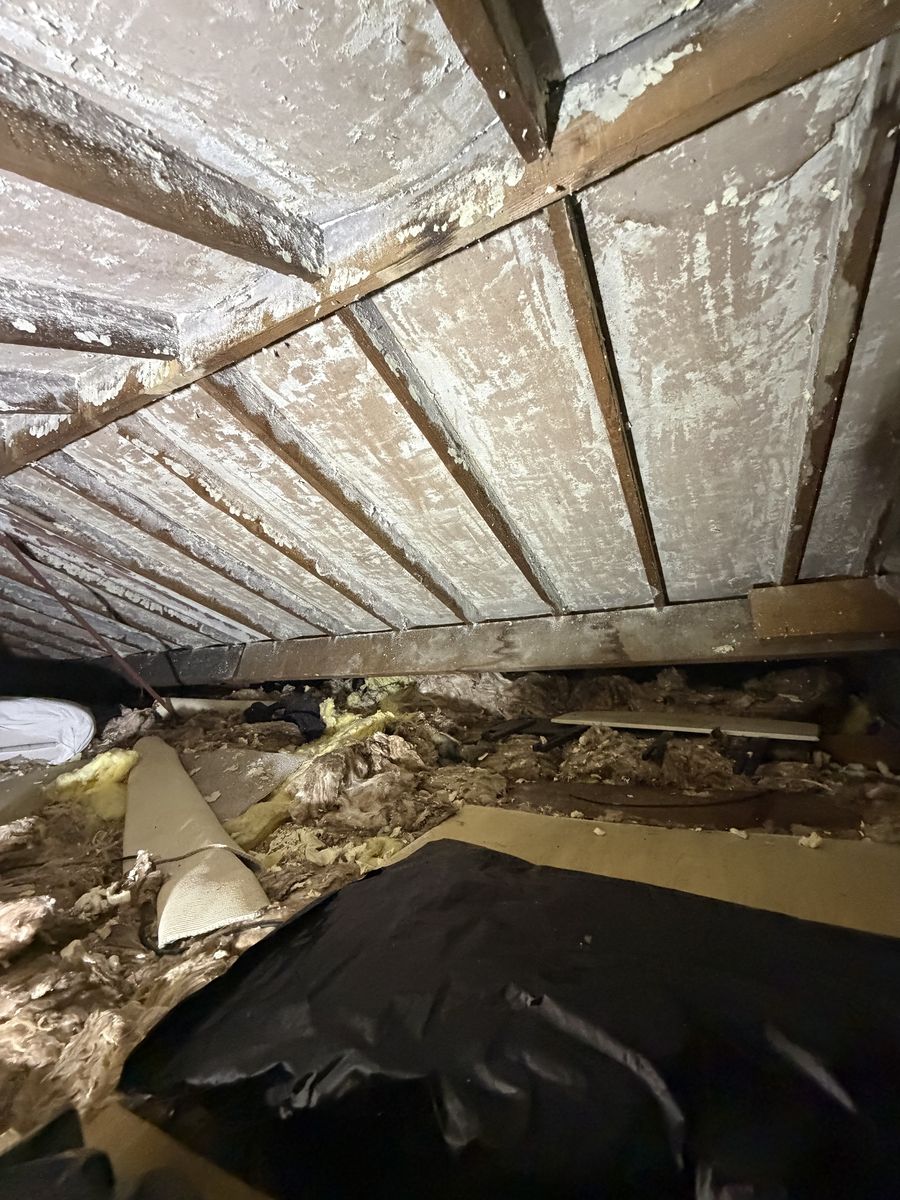
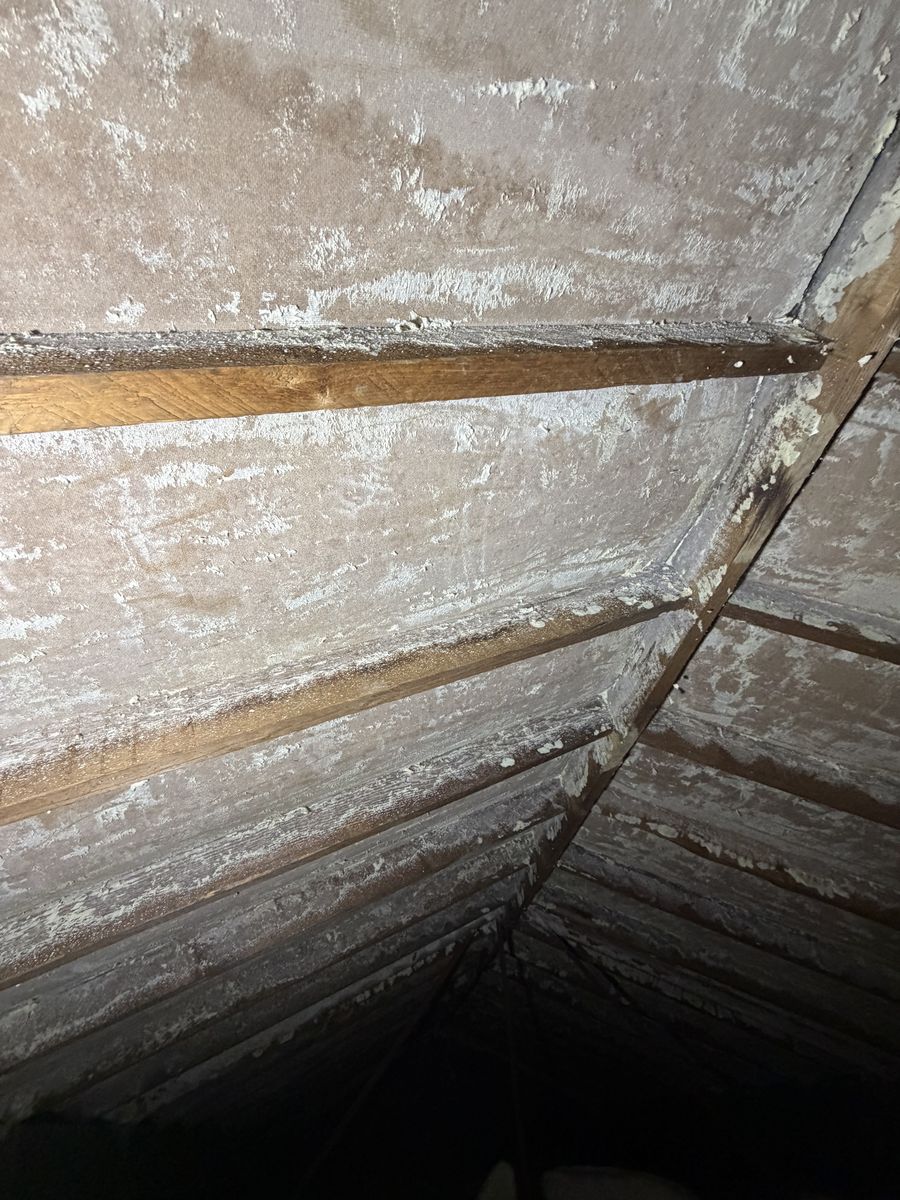
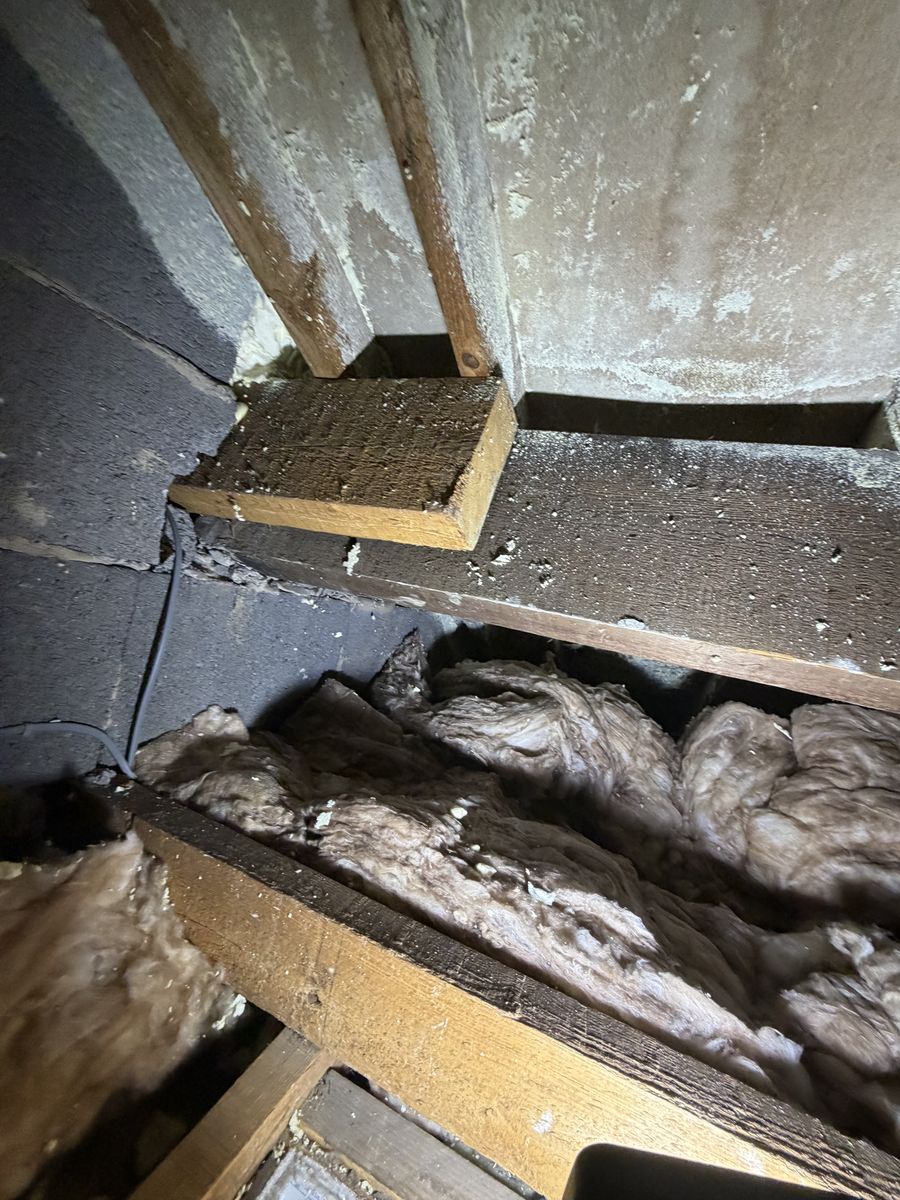
The PCA/RPSA protocol gives no procedure for checking a roof after removal, which is exactly why an independent post-removal inspection matters. These are the checks we make.
| Check | Satisfactory result |
|---|---|
| Residue | No foam left on rafters, battens, underlay or the backs of slates and tiles; eaves clear |
| Timbers | No decay, staining or soft timber; moisture readings recorded across the roof, including north-facing slopes and eaves. Readings above about 20% are treated as a warning sign needing further investigation |
| Underlay & battens | Intact and secure, or replaced; tile and slate fixings secure |
| Ventilation | Eaves and ridge ventilation reinstated; cold roof void ventilated |
| Insulation | Ceiling-level insulation reinstated to current standards |
| Services | Cables and pipes freed from foam and undamaged |
There is currently no national certificate or register for spray foam removal. The PCA has announced plans for a membership scheme for removal contractors, but at the time of writing no standard or member list has been published. Some firms issue their own certificates; lenders do not mandate them.
Spray foam inspections and post-removal validation are priced on the roof, its access and what’s already known. Send us the address and any paperwork and we’ll give you a fixed fee. If you’re buying, the inspection can sit alongside a RICS Level 3 survey of the whole house.
Drone inspection of the roof covering included. Chartered QS repair costs available where work is needed. Usually quoted within 4 hours.
or call 07863 749917
Often, yes. Government guidance lists major lenders that are open to lending on homes with spray foam, subject to their own requirements, and many ask for an independent inspection report under the PCA/RPSA protocol. Criteria vary between lenders and change over time, so check with your broker early. Equity-release and later-life lenders have historically been the strictest.
Not always. The right answer depends on what the foam is bonded to, the type of foam, the condition of the roof and the timber moisture levels. An independent assessment should come first, and removal should only follow if that assessment recommends it. Removal can damage tiles, battens and underlay, and it does not on its own guarantee that a lender will accept the property.
There is no national certificate or register for spray foam removal. Some removal companies issue their own certificates, but lenders do not mandate them. What buyers and lenders rely on is evidence: the pre-removal assessment, the remover’s method statement and waste notes, photographs, and an independent post-removal inspection with moisture readings.
The joint customer guidance referred to by the government advises using an assessor who belongs to an appropriate body such as the PCA, RPSA, RICS or CABE, holds professional indemnity insurance and has no commercial interest in removal. Dave Lovatt is a chartered surveyor (MRICS), a Chartered Building Engineer (MCABE C.Build E) and an RPSA member, and Lovatt Home Surveys does not install or remove spray foam.
A RICS Level 2 or Level 3 survey will identify and describe spray foam where it can be seen, and flag the implications for the roof and for lending. A specialist assessment under the PCA/RPSA protocol goes further, and is what most lenders ask for. If you are buying, we can carry out both on the same visit.
Taking the foam out on its own does not normally appear to be notifiable building work. However, if removal leads to re-roofing or re-insulating, the work can fall under Part L (thermal performance) and Part C (condensation) of the Building Regulations, and a replacement roof normally needs a building notice. Ask for the building control completion certificate where that applies.
Don’t agree to anything on the doorstep or over the phone. Trading Standards have warned about callers using fake government or PCA identities and offering free surveys. Report unsolicited calls to Trading Standards, and get an independent assessment from someone who has nothing to gain from the removal.
Guidance reviewed November 2026. Lender criteria and industry schemes change — we check the current position on every instruction. This page is general information, not legal or financial advice.
Spray foam inspections and post-removal validation across Northumberland, Tyne & Wear and County Durham.